
shop-front illustrative
Wolf Tattoos
Highett VIC 3190, VIC
5.0
181 reviews wheelchair-accessible parking
View Studio
Wolf tattoos embody loyalty, family bonds, and wild independence. Lone wolves represent self-reliance while pack imagery speaks to loyalty. Popular in realism, geometric, and dotwork styles, wolves suit the forearm, upper arm, and back. Look for artists who can capture the intensity of a wolf's gaze and the texture of fur through skilled shading.
InkLocate's Australian tattoo library catalogues 154 wolf tattoo photos from 138 studios nationwide, each tagged by style, subject and placement. Across these, wolf tattoos are most often worked in realism, black & grey and blackwork, and most commonly placed on the forearm, upper arm and calf.


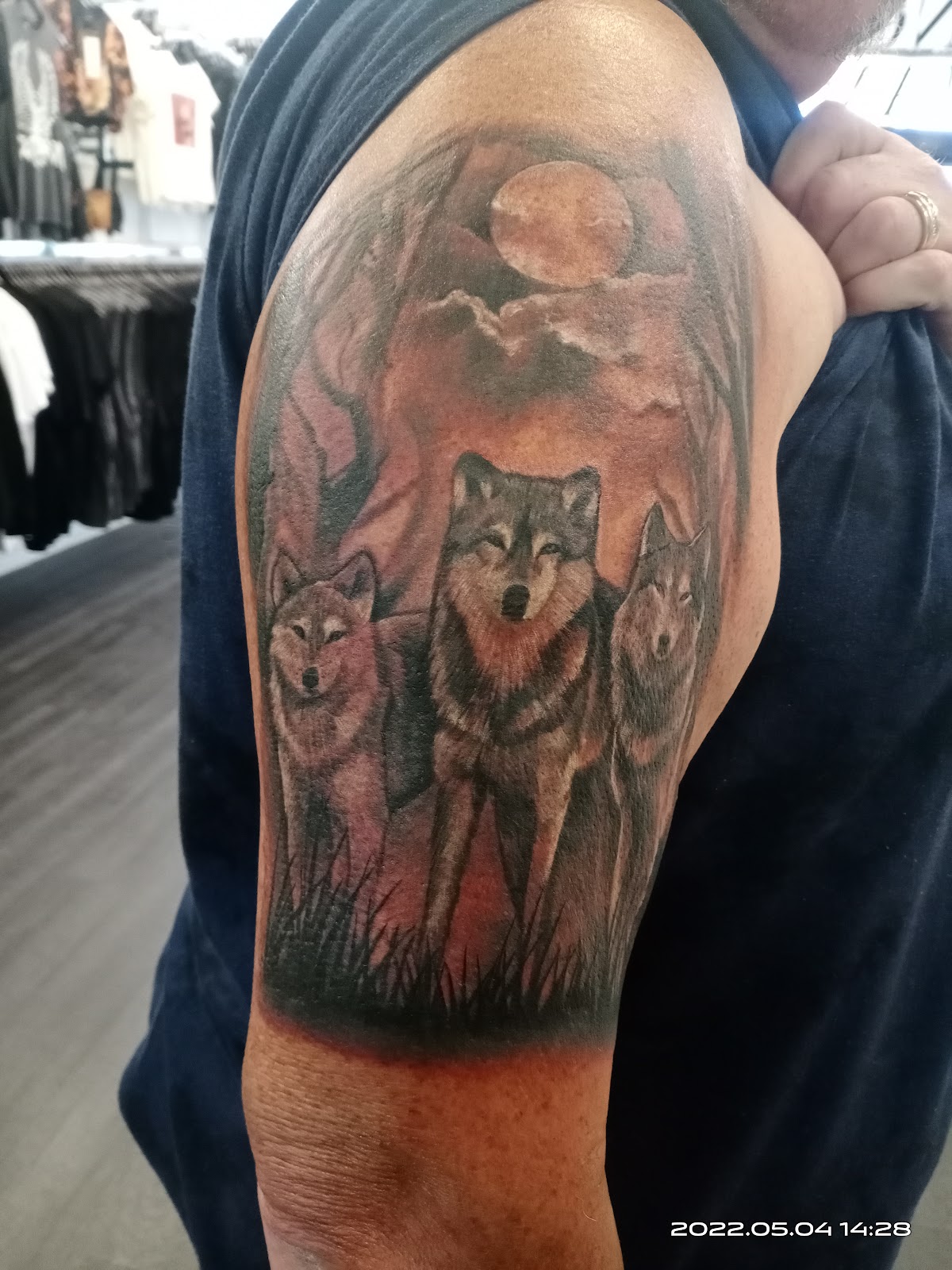


Wolf tattoos carry rich symbolism that varies across cultures and personal meaning. Browse artist portfolios on InkLocate to find designs that resonate with your interpretation. Your chosen artist can help refine the symbolism through custom design elements.
Wolf tattoo pricing depends on size, detail level, style, and artist experience. Small wolf pieces may start from $150-300, while larger detailed work can range from $500 to several thousand dollars. Use InkLocate to compare artists and request quotes directly.
Across InkLocate's Australian library, wolf tattoos most often appear in realism, black & grey, blackwork and linework. The best style depends on your aesthetic preference and how much detail you want — browse the wolf photos above to see how different artists interpret this subject.
In our library, wolf tattoos are most commonly placed on the forearm, upper arm, calf and chest. Smaller pieces suit the wrist, ankle, or behind the ear, while larger compositions work on the forearm, thigh, or back. Discuss placement with your artist during a consultation.